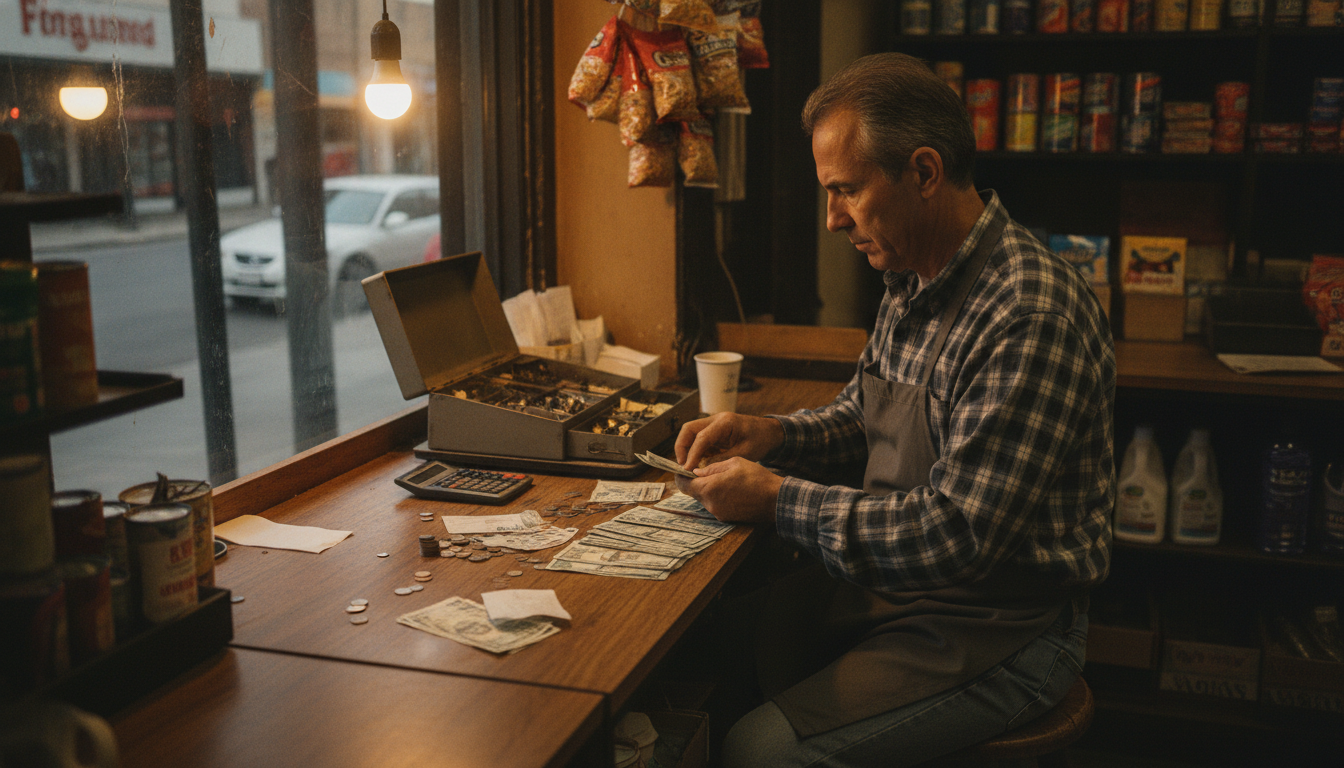
Weighed honestly, the dual pricing advantages and disadvantages come down to a single trade. You keep more of each sale, and you spend some goodwill at the counter to do it. Whether that trade is good depends on your margin, your card mix and how price-sensitive your regulars are.
RetailZPOS’s July 28, 2026 article lists fee savings, cash flow and customer trust as advantages when both prices are shown before purchase. Treat those as a vendor’s sales points. Your regulars will tell you whether the goodwill cost is real.
Dual pricing advantages and disadvantages: the case for
Card acceptance is a real cost that behaves like a tax on revenue, and on thin-margin stock it can be a meaningful share of what you actually make on an item. A two-price policy moves that cost to the customer who chose the expensive tender.
With our own zero cost processing option, the merchant pays 0% and the cardholder pays 3.95%. Sample pricing applies to new accounts applying directly; pricing is subject to underwriting, MCC and the merchant agreement; rates may differ and are subject to change.
It is also honest in a way a hidden cost is not. The customer sees both numbers and picks. Nobody is being charged for something they were not told about, which is more than can be said for the way most stores absorb the cost silently and raise every shelf price a little to cover it.
There is a cash-flow argument too. Stores that run it typically see some shift toward cash, and cash settles the same day rather than the next business day. On a store that pays vendors on delivery, that matters more than the headline saving.
And it prices by cost to serve. A customer who costs you more to serve pays a bit more. That is how most other costs in your business already work.
And the case against
The counter is the first cost. Someone will argue, usually about the wrong thing, usually while there is a queue. Your cashier absorbs that, not you, and that job is already hard enough.
The second cost is comparison. Shoppers compare posted prices, and your card price is now the number on the shelf. If the store across the road posts one price and yours posts a higher card price beside a lower cash price, some people read only the higher one and walk. That risk scales with basket size. Almost nobody reprices a candy bar. Plenty of people reprice a case of spirits.
Third, it adds operational surface. Every shelf tag now carries two numbers that both have to be right, and every price change is two changes. Stores with sloppy tag discipline should fix that before adding a second number to get wrong.
Fourth, it is a commitment. Rolling it back after six months tells your regulars something, and reversing a policy costs more goodwill than never running it.
Which stores it suits
High card mix, thin margins, frequent small baskets, and regulars who see the signs often enough to stop noticing them. Stores where the owner is present and comfortable saying “yes, we have two prices” once and then leaving it alone.
Stores with a genuinely modern register also do much better with it, because the switch happens at tender without a cashier deciding anything. If you are still weighing hardware, our page on what a POS system costs covers the difference between a system that can do this cleanly and one that will need a key press every time.
Which stores it does not
Stores selling large, infrequent, comparison-shopped baskets. Stores with high foot traffic from people who will never come back and never see the signs twice. Stores in a tight competitive cluster where a shelf tag gets compared item for item.
Also any store that has not measured its actual processing cost. Owners often assume that cost is bigger than it turns out to be. Run the arithmetic first with our processing fee calculator, which works entirely in your browser. If the number is smaller than you feared, the goodwill is not worth spending.
A middle path if you are unsure
Two options that are less than the full policy.
Run it on a category rather than the whole store, choosing one where the margin is thinnest and the shoppers are least price-comparative. This is not ideal, because mixed application confuses people, but on a clearly defined category with its own signage it can work as a trial.
Or do nothing to your prices and fix the cost instead. Downgraded transactions, fixed monthly charges and a high markup are all recoverable without touching a single shelf tag, and none of them costs you anything at the counter. For a smaller bodega setup, that is often the whole answer.
If you do decide to go ahead, do the mechanics properly. Both models and their conditions are set out on our cash discount and dual pricing page, and if you want a look at your own numbers before choosing, send us a statement.
Frequently asked questions
How much does a store actually keep? That depends entirely on your card mix, your average ticket and what you pay now. Anyone quoting you a figure without seeing your statement is guessing, and we would rather tell you that than guess.
Will regulars leave? Most do not, if the signs are clear and the gap is proportionate. The stores that lose people are the ones where the second price appeared as a surprise at the register.
Can I test it for a month? You can, but plan for the possibility of stopping. Tell staff it is a trial, keep the old shelf tags, and decide in advance what result would make you keep it.
Does it affect my vendors or scan data programs? Vendor programs are set by the vendor and read your scan data, so check with each one rather than assuming. It is worth asking before you change posted prices, not after.